The Crude Oil & Austerity Appeal

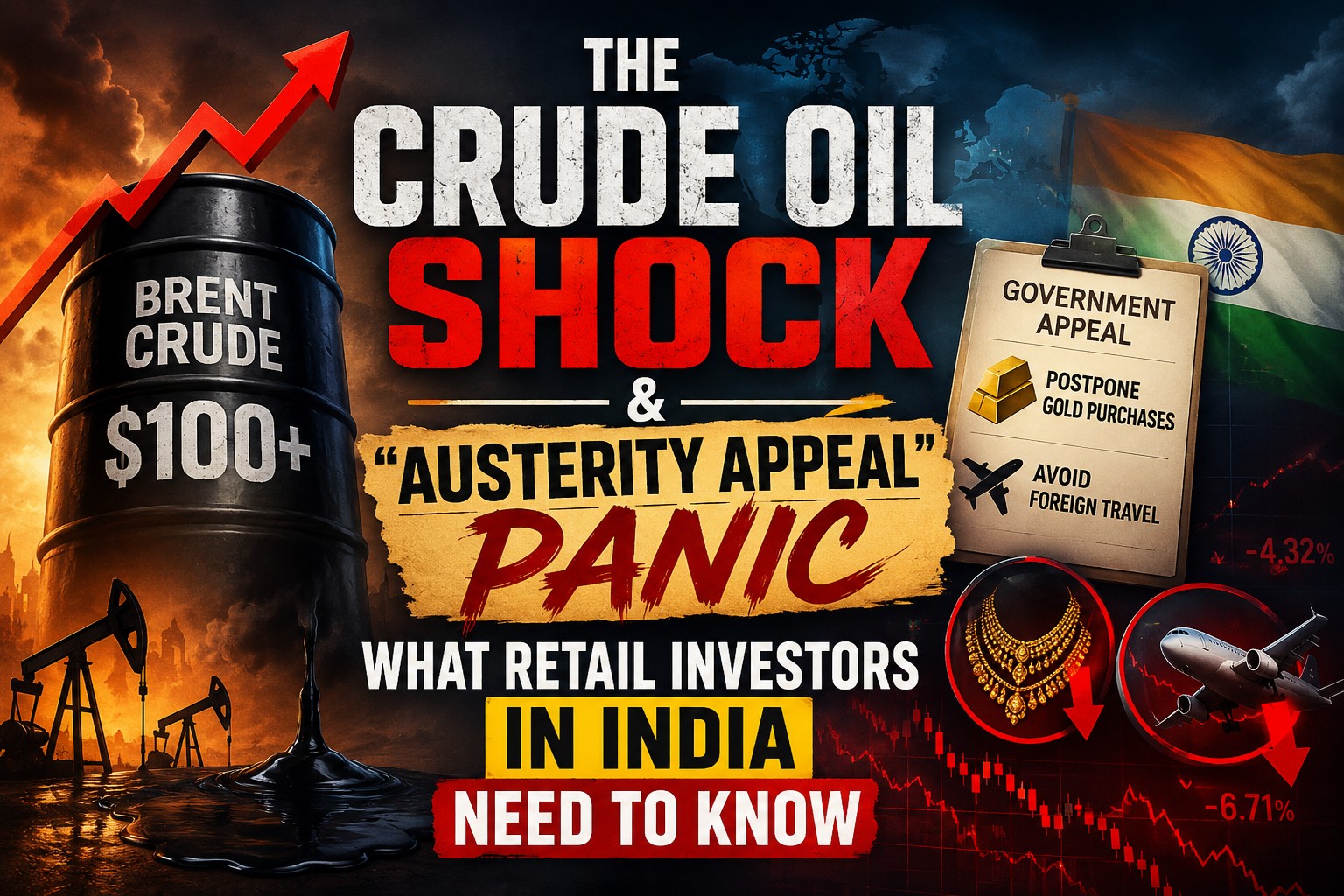
Two developments converged this week to unsettle Indian markets: Brent crude’s jump above $100 amid renewed US–Iran tensions and a government appeal asking citizens to temporarily curb gold purchases and foreign travel to manage the import bill. The combination strikes at both macro stability and retail sentiment — which explains why jewellery and airline stocks tumbled immediately.
Why $100+ oil matters for India?
India imports roughly 80% of its crude needs. When Brent crosses the $100 mark, three transmitted effects are immediate:
- Inflation pressure: Higher crude pushes fuel and transport costs, feeding into headline inflation. That erodes real consumer spending and squeezes margins for firms unable to pass on costs.
- Current account pressure: A more expensive oil bill widens the current account deficit (CAD). Larger CADs can spook currency markets and force the rupee lower.
- Policy implications: Elevated inflation and a worsening CAD make it harder for the Reserve Bank of India to cut rates or loosen liquidity. The central bank may adopt a more cautious stance until the shock subsides.
What the “austerity appeal” does to markets?
A government call to postpone gold buys and foreign travel is aimed at reducing import demand quickly. But for markets, the messaging has a psychological effect: retail investors, who hold meaningful exposures in jewellery chains and travel names, react emotionally. Headlines suggesting macro stress trigger rapid de-risking — and that’s exactly what we saw: sharp intraday drops in jewellery retailers and airlines as sell-side algorithms and retail flows amplified the move.
Sector-by-sector quick read
- Jewellery: Direct hit. Lower discretionary gold demand can reduce volumes; listed chains with higher loan-to-value inventories or weaker margins are most vulnerable.
- Airlines & Travel: Jet fuel is a major cost. Higher crude plus weaker discretionary travel sentiment hurts yields and load factors.
- Refiners & Oil & Gas: Beneficiaries. Higher crack spreads and export opportunities can lift refiners; upstream and integrated oil majors often gain.
- Banks & NBFCs: Mixed. Margin pressure on consumers could slow loan growth; banks with large forex exposure could face currency-related stress.
- Consumer Discretionary: Broader slowdown risk if inflation reduces discretionary spending.
What retail investors should do
- Avoid panic-selling; check exposures and haircut positions in discretionary sectors.
- Favor companies with pricing power, low forex exposure, and strong balance sheets.
- Consider energy/refining exposure as a partial hedge against rising crude.
- Watch RBI cues closely; central bank guidance will shape the market’s next leg.
- Use volatility to rebalance into quality rather than chase rebounds.
What Investor's should do?
This is a classic external shock amplified by a policy signal aimed at behavioral change. Markets will price both the economic reality of a dearer oil bill and the sentiment shock among retail investors. Focus on position sizing, sector differentiation, and staying alert to central bank commentary.



Leave a Comment